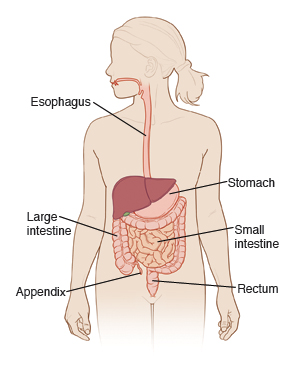
Traveler's diarrhea is an infection in the digestive tract. It's usually caused by bacteria called E coli. E coli is commonly found in water supplies of developing countries. The local people of those countries are used to E coli in the water and don't get sick. Tourists who drink contaminated water or eat foods that were washed or prepared with this water may become very ill.
The illness begins 1 to 3 days after exposure and lasts up to 5 days. Symptoms are usually mild. But they can be bothersome, with watery diarrhea and stomach cramping. Sometimes you may have fever or vomiting. You may also have blood or mucus in the stool. Mild cases will get better without treatment. Antibiotics are used for more severe cases.
Home care
-
If you were prescribed antibiotics, take them until they are gone.
-
You may take acetaminophen or ibuprofen to control fever, unless another medicine was prescribed. If you have chronic liver or kidney disease or have ever had a stomach ulcer or gastrointestinal bleeding, talk with the doctor before using these medicines. Don't give aspirin to children or teens unless your child’s doctor says it is safe. Aspirin can put your child at risk for Reye syndrome, a rare but serious condition.
-
Don't take over-the-counter medicines for diarrhea, unless advised by the doctor. Never take these kinds of medicine if your diarrhea is bloody.
After vomiting stops, follow these guidelines:
During the first 12 to 24 hours, follow the diet below:
-
Fruit juices. Apple, grape and cranberry juice, clear fruit drinks, electrolyte replacements, and sports drinks.
-
Beverages. Soft drinks without caffeine, mineral water (plain or flavored), and decaffeinated tea and coffee.
-
Soups. Clear broth, consommé, and bouillon.
-
Desserts. Plain gelatin, popsicles, and fruit juice bars. As you feel better, you may add 6 to 8 ounces of yogurt per day.
During the next 24 hours, you may try these:
-
Hot cereal, plain toast, bread, rolls, or crackers
-
Plain noodles, rice, mashed potatoes, or chicken noodle or rice soup
-
Unsweetened canned fruit (not pineapple) and bananas
-
Limit how much fat you eat to less than 15 grams per day. Don't have margarine, butter, oils, mayonnaise, sauces, gravies, fried foods, peanut butter, meat, poultry, or fish.
-
Limit fiber. Don't eat raw or cooked vegetables, fresh fruits (except bananas), or bran cereals.
-
Limit caffeine and chocolate. Don't have any spices or seasonings except salt.
During the next 24 hours, you can slowly go back to a normal diet as the symptoms ease.
Follow-up care
Follow up with your doctor, or as advised. Call if you are not getting better within 24 hours or if the diarrhea lasts more than 1 week on antibiotics. If a stool (diarrhea) sample was taken, you may call in 1 to 2 days or as directed for the results.
When to get medical advice
Contact your doctor if any of the following occur:
-
Severe constant pain in the lower part of the belly, on the right side
-
A small amount of blood in diarrhea or vomit, vomit that looks like dark coffee grounds, or dark tarry stools
-
Continued vomiting (can't keep liquids down)
-
Diarrhea that happens more than 5 times a day
-
Poor appetite
-
Urinating less than normal or being very thirsty
-
Fever of 100.4°F (38°C) or higher, or as directed by your doctor
Call 911
Call
-
Weakness, dizziness, or fainting
-
Drowsiness, confusion, stiff neck, or seizure
-
A large amount of blood in diarrhea or vomit, vomit that looks like dark coffee grounds, or dark tarry stools
Online Medical Reviewer: Jessica Gotwals RN BSN MPH
Online Medical Reviewer: Ronald Karlin MD
Date Last Reviewed: 04/01/2025
© 2000-2026 The StayWell Company, LLC. All rights reserved. This information is not intended as a substitute for professional medical care. Always follow your healthcare professional's instructions.