Iliotibial (IT) band syndrome is a condition that causes pain on the outside of the knee. It most often occurs in athletes. It's most common in long-distance runners. It can happen if you cycle, ski, row, or play hockey, basketball, or soccer. It can also occur in people who are starting to exercise or people who abruptly increase their exercise intensity.
Types of treatment
Treatment may include:
-
Taking a break from activity that makes your knee pain worse (like running), and going back to it slowly over time
-
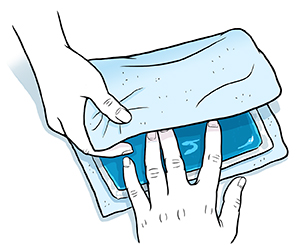
Icing the outside of your knee when it causes you pain. Never put an ice pack directly in contact with your skin. Wrap it in a thin towel and then use it.
-
Taking over-the-counter pain medicines
-
Having corticosteroid injections, to reduce inflammation
-
Making changes to your activity, like lowering your bicycle seat for cycling or improving your running form
-
Doing exercises to stretch and make the muscles around your hip and knee stronger
You may find it helpful to work with a physical therapist.
These treatments help most people with IT band syndrome. Your healthcare provider may advise surgery if you still have severe symptoms after 6 months or more of other treatment. Your healthcare provider will talk with you about the types of surgery.
Preventing IT band syndrome
You may be able to prevent IT band syndrome if you:
-
Run on even surfaces
-
Replace your running shoes often to prevent uneven wear of the soles
-
Ease up on your training
-
On a track, make sure you run in both directions
-
Have an expert check your stance for running and other sports
-
Stretch your outer thigh and hamstrings often
If you are new to exercise, start slowly. Increase your activity over time.
Talk with your healthcare provider or trainer for more advice.
When to call the healthcare provider
Call your healthcare provider right away if you have any of these:
-
Symptoms that get worse, or don’t get better with treatment
-
New symptoms
Online Medical Reviewer: Raymond Turley Jr PA-C
Online Medical Reviewer: Stacey Wojcik MBA BSN RN
Online Medical Reviewer: Vinita Wadhawan Researcher
Date Last Reviewed: 12/01/2024
© 2000-2026 The StayWell Company, LLC. All rights reserved. This information is not intended as a substitute for professional medical care. Always follow your healthcare professional's instructions.
Bone and Joint Care
Find expert care for joint pain, injuries, and conditions that affect how you move at the HPH Bone & Joint Centers.
Learn MoreRelated Articles
Surgery for Shoulder Impingement: Your Experience
Surgery can help free up space in your shoulder joint. This relieves symptoms of impingement. Prepare for surgery as instructed. If you don’t, your surgery may have to be rescheduled. Your healthcare provider will give you instructions for recovering at home. If you have any questions, be sure to get them answered.
Carpal Tunnel Release Surgery
If you have severe carpal tunnel syndrome, you may have carpal tunnel release surgery.
Surgery for Shoulder Impingement
For many people, nonsurgical treatments are enough to ease shoulder impingement symptoms. But if these treatments haven’t worked, surgery may be an option.
Understanding Ankle Replacement Surgery
Ankle replacement surgery is a procedure to treat arthritis of the ankle joint. The damaged ankle joint is replaced with an artificial implant.