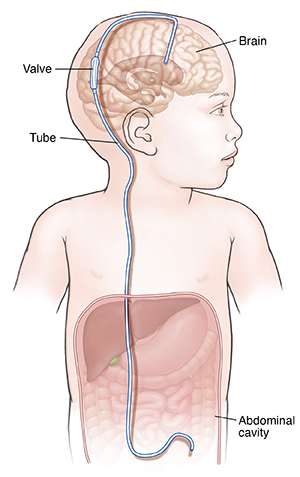
Your child has been given a VP (ventriculoperitoneal) shunt. It is used to treat extra fluid made within the brain (hydrocephalus). This extra fluid causes pressure on the brain. In a growing child, the extra pressure inside the skull will cause the head to enlarge. It will also cause nervous system problems. The shunt lets the extra fluid overflow through the shunt tubing into the abdominal cavity (or another site) where the body can absorb it.
A valve is attached to the tubing that lets fluid flow in only 1 direction—away from the brain. You can feel the valve below the scalp, usually behind the ear. There are different types of valves. The healthcare provider can explain if your child's valve is working correctly.
Home care
If there was concern today about the function of the shunt, check the valve daily for the next 3 days. Tell your child's healthcare provider about any concerns you have. Once you know the shunt is working well, you don't need to check the valve again unless told to do so by the provider.
Follow-up care
Follow up with your child's healthcare provider as advised.
When to seek medical advice
Call your child's healthcare provider if any of the following occur:
-
Fever of 100.4ºF (38ºC) or higher, or as directed by your child's provider
-
Unusual drowsiness or confusion
-
Headache that doesn't go away
-
Visual changes
-
Repeated vomiting
-
Belly pain that does not go away
-
Poor appetite that does not get better
-
Sudden changes in behavior
-
Redness, swelling, bleeding, or discharge from the area where the shunt valve was placed
-
Seizure
Featured in