Body mass index (BMI) is a way to figure out your weight category. It uses the ratio of your height to your weight. BMI is a measure of your weight that is corrected for height. Knowing your BMI is a way to tell if you are at a healthy weight, underweight, or overweight. The higher your BMI, the greater your risk for weight-related health problems.
What BMI means for adults
-
BMI below 18.5: Underweight
-
BMI 18.5 to 24.9: Healthy weight or ideal body weight
-
BMI 25 to 29.9: Overweight
-
BMI 30 and over: Obese
-
BMI 40 and over: Severe obesity
Use an online tool
Go online and search for BMI calculators. Try the Centers for Disease Control and Prevention (CDC) website. Or go to the American Cancer Society website. Both have online BMI tools.
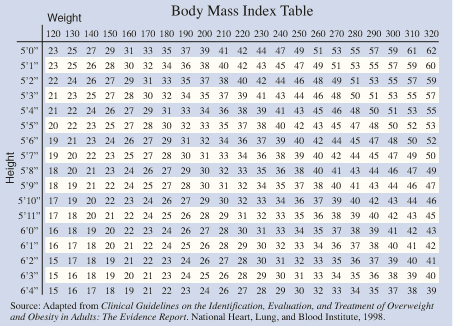
Using the BMI chart
To figure out your BMI, find your height and weight (or the numbers closest to them) on the table below. Follow each column of numbers to where your height and weight meet on the table. That is your BMI.
Featured in
Online Medical Reviewer: Raymond Turley Jr PA-C
Online Medical Reviewer: Sravani Chintapalli Researcher
Date Last Reviewed: 04/01/2025
© 2000-2026 The StayWell Company, LLC. All rights reserved. This information is not intended as a substitute for professional medical care. Always follow your healthcare professional's instructions.


