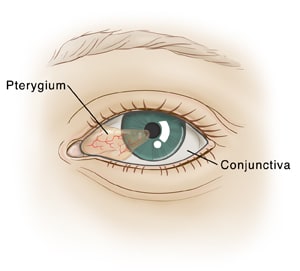
A pterygium is a noncancerous growth that starts in the clear, thin tissue over the eye (conjunctiva). This fleshy growth covers the white part of the eye (sclera) and grows onto the clear protective layer on the front part of the eye (cornea). One or both eyes may be affected. A pterygium may have no symptoms, or it may cause eye irritation, itching, and redness. If the growth is large, it can cause vision problems. Most of the time a pterygium is harmless, and no treatment is needed. If vision is affected, it should be removed.
It's not known exactly what causes a pterygium. Exposure of the eyes to the sun (UV-light exposure), dust, wind, and low humidity are thought to be factors. People who spend a lot of time in the sun, or who live in places where the sun's rays are intense, may have an increased risk of developing pterygia. To protect your eyes, wear sunglasses with side shields that block 100% of UV rays when outside. This may help prevent the condition from coming back or getting worse. It is also helpful to wear a wide-brimmed hat when outside.
Home care
If you have a pterygium, over-the-counter eye drops may be advised. These help soothe inflammation and dryness.
Follow-up care
Follow up with your doctor as advised. If you notice changes in your vision, contact an eye doctor (ophthalmologist) right away.
When to get medical care
Call your doctor right away if any of these occur:
- Changes in your vision
- Bleeding from your eyes
- Eye pain
- New eye problems
Online Medical Reviewer: Chris Haupert MD
Online Medical Reviewer: Rita Sather RN
Online Medical Reviewer: Tara Novick BSN MSN
Date Last Reviewed: 09/01/2025
© 2000-2026 The StayWell Company, LLC. All rights reserved. This information is not intended as a substitute for professional medical care. Always follow your healthcare professional's instructions.


