After carotid artery stenting, you will most likely stay overnight in the hospital for care and monitoring. At home, follow your doctor’s instructions for recovery. Be sure to go to your health appointments. This includes any imaging tests and other follow-up treatments. They can help make the procedure a success.
Just after the procedure
After the procedure, you can expect the following:
-
You will be taken to the recovery room for observation.
-
A nurse will watch your vital signs, your neurological signs, and the insertion site while you are in the recovery room.
-
When your blood pressure, pulse, and breathing are stable and you are alert, you may be taken to the intensive care unit (ICU) or a regular hospital room.
-
If the sheath was left in the insertion site, it will be taken out of the groin or arm when it is safe to do so. It's very important that you keep the leg or arm with the catheter straight during this time.
-
After the sheath is taken out, pressure will be applied directly to the site either manually or with a clamp-type device for about 20 minutes. After bleeding has stopped completely, a tight dressing will be put on the site.
-
You may need to keep your leg straight for 2 to 6 hours.
-
You may be given medicine for pain or discomfort from the insertion site or from having to lie flat and still for a long time.
-
After the period of bed rest is done and there is no bleeding from the insertion site, you may get out of bed. The nurse will help you the first time. They will check your blood pressure while you are lying, sitting, and standing.
Your hospital stay
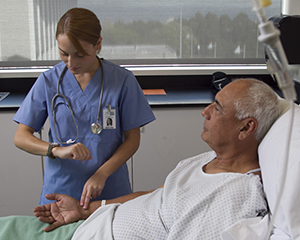
While you are in the hospital, you can expect the following:
-
You’ll be closely monitored until you’re ready to go home.
-
Hospital staff will check your pulse, blood pressure, and neurologic function from time to time.
-
You may also have tests of your brain function, blood tests, or an ultrasound.
-
Your I.V. will stay in place until shortly before you go home.
When can you leave the hospital?
Most people leave the hospital the next day. You can go home when:
-
Your condition is stable.
-
You don't have weakness or numbness in either your legs or arms.
-
The groin insertion site is not bleeding or swollen.
-
You have no signs of infection.
-
You have no headache or swings in your blood pressure or pulse.
-
Your doctor has reviewed any test results and has cleared you to go home.
Online Medical Reviewer: Esther Adler
Online Medical Reviewer: Mahammad Juber Medical Researcher
Online Medical Reviewer: Raymond Kent Turley BSN MSN RN
Date Last Reviewed: 06/01/2025
© 2000-2026 The StayWell Company, LLC. All rights reserved. This information is not intended as a substitute for professional medical care. Always follow your healthcare professional's instructions.
Heart Care You Can Trust
Get expert care for heart conditions, backed by experienced specialists at the HPH Heart Centers.
Learn MoreRelated Articles
Putting On Compression Stockings and Compression Devices
Learn about compression socks and other devices that can help blood flow from your legs to your heart and can help prevent swelling.
After Peripheral Artery Bypass Surgery: In the Hospital
After peripheral artery bypass surgery, plan on being in the hospital for about 3 to 8 days. The length of your stay depends on the type of bypass you have, your health, and how you respond to surgery.
After Endovascular Abdominal Aortic Aneurysm Repair
Tips for home care and when to call your doctor after an abdominal aortic aneurysm repair.
Putting on Thigh-High Compression Stockings
Here are images to help you understand how to put on thigh-high compression stockings.



