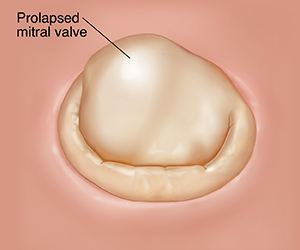
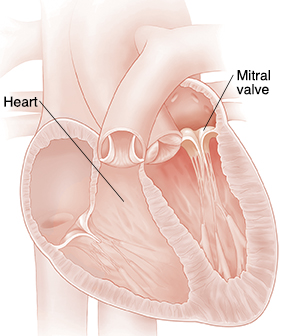
Mitral valve prolapse is the most common heart valve problem. With this condition, the valve that separates the left atrium and left ventricle doesn’t open and close as it should. Extra tissue in the valve can stop it from closing correctly. This can make the valve leaky.
Most cases of mitral valve prolapse aren't serious. Usually, only a small amount of blood leaks backward. This doesn't cause problems and doesn't need treatment. But sometimes a larger amount of blood can leak backward. This can lead to a serious problem, as the blood that leaks backward must be pumped twice. Over time, this takes a toll on the heart. You may need surgery to fix the valve if the heart starts to function poorly.
Symptoms of mitral valve prolapse
Mitral valve prolapse may not cause symptoms. If you do have symptoms, they may include:
-
Mild chest pain
-
Pounding or racing heart (palpitations)
-
Shortness of breath
-
Trouble breathing with activity
-
Fatigue
-
Migraine headaches
-
Fainting
Possible causes
Mitral valve prolapse is often present from birth. But some people can develop it later in life. In some cases, the condition is passed down from your parents (inherited).
Treating mitral valve prolapse
Most people with mitral valve prolapse have mild disease that doesn't get worse. It doesn't need to be treated. But sometimes the valves get more stretched out over time and can cause symptoms. Medicines can help ease symptoms.
Your healthcare provider may ask you to come in from time to time for tests to check your heart valve and to be sure the problem hasn’t gotten worse. In severe cases, surgery to fix or replace the valve may be needed.
Online Medical Reviewer: Ronald Karlin MD
Online Medical Reviewer: Stacey Wojcik MBA BSN RN
Online Medical Reviewer: Steven Kang MD
Date Last Reviewed: 04/01/2024
© 2000-2026 The StayWell Company, LLC. All rights reserved. This information is not intended as a substitute for professional medical care. Always follow your healthcare professional's instructions.
Heart Care You Can Trust
Get expert care for heart conditions, backed by experienced specialists at the HPH Heart Centers.
Learn MoreRelated Articles
Angina Pectoris
Angina pectoris is chest pain or a feeling of chest discomfort that occurs when a part of your heart doesn't get enough blood and oxygen. Learn more about angina, including causes, risks, symptoms, diagnosis, treatment, and prevention.
The Cardiologist
A cardiologist is a doctor who has had extra training to treat problems of the heart and blood vessels. These include heart attack and heart failure.
Heart Valve Problems: Aortic Insufficiency
Aortic insufficiency means your aortic valve has problems closing. Blood leaks back through the valve. Extra blood may cause the ventricle to stretch. A stretched ventricle doesn't squeeze as well. In time, the heart won't move blood the way it should.
What You Can Do to Prevent Atherosclerosis
Atherosclerosis can cause strokes, heart attacks, and death. But you can prevent this condition with things like a heart-healthy diet, exercise, and keeping a healthy weight.



