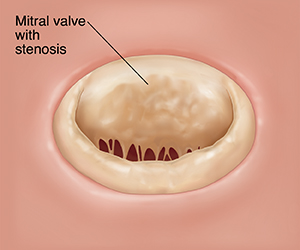
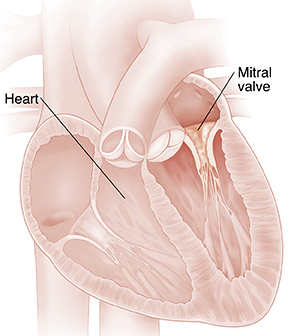
Mitral stenosis means the mitral valve stiffens and doesn’t open all the way. When it can't fully open, blood must move through a smaller opening. In severe cases, it can affect other organs and the rest of the body. Fluid and pressure can build up in the lungs. This can lead to coughing and breathing problems. Problems with the mitral valve can also cause a fast or irregular heartbeat (palpitations). Over time, mitral stenosis may slowly get worse.
Possible causes
Mitral stenosis is most often caused by rheumatic fever. This illness can lead to an inflammation that damages the heart valves. Other causes include mitral valve prolapse and heart defects from birth (congenital). Although pregnancy doesn’t cause mitral stenosis, symptoms may start during pregnancy if undiagnosed mitral stenosis is present. This is because the amount of blood the heart has to move has increased.
Treating mitral valve stenosis
If you don't have symptoms, you usually don't need treatment. If symptoms occur, your health care provider may prescribe medicines to help ease them. If the stenosis is severe, a procedure called balloon valvuloplasty can stretch the opening of the valve for short-term relief.
Heart surgery with valve replacement using either a tissue or mechanical valve is often the best long-term choice to manage this problem.

Heart Care You Can Trust
Get expert care for heart conditions, backed by experienced specialists at the HPH Heart Centers.
Learn MoreRelated Articles
Understanding Atherosclerosis
Atherosclerosis can start as early as childhood and can lead to many health conditions, including heart disease and stroke.
Ischemic Cardiomyopathy
Ischemic cardiomyopathy is a disease of the heart muscle.
Heart Valve Problems: Aortic Insufficiency
Aortic insufficiency means your aortic valve has problems closing. Blood leaks back through the valve. Extra blood may cause the ventricle to stretch. A stretched ventricle doesn't squeeze as well. In time, the heart won't move blood the way it should.
Takotsubo Cardiomyopathy (Broken Heart Syndrome)
Takotsubo cardiomyopathy is a type of heart condition. Blood flow to part of the heart is briefly blocked. Although the symptoms of TCM may feel like a heart attack, the two conditions are different.