Personal protective equipment or PPE is specialized clothes or equipment that help prevent the spread of infections. They create a barrier between you and germs. They also help protect against chemical and physical harms, such as toxic fumes or corrosive liquids. To use standard precautions while using PPE, follow the guidelines below.
When to wear gloves
Before wearing gloves, wash and dry your hands well. Cover cuts, scratches, or scrapes with bandages. Also:
-
Wear gloves whenever contact is possible with blood or other potentially infectious materials. This includes any body fluids and substances (except sweat), broken skin, or mucous membranes.
-
Wear gloves when touching any item that may be contaminated. Don't touch uncontaminated items with contaminated gloves. Change gloves when moving from a contaminated body area to a clean one. Keep your hands away from your face.
-
Remove gloves right after use. Wash hands and put on clean gloves between patients. Don’t reuse disposable gloves.
When to wear other PPE
Gowns, masks, goggles, and other PPE can help keep you and your patients safe. In addition to gloves, you may need to wear:
-
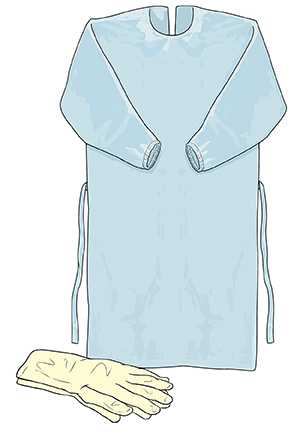
A gown, apron, or lab coat to protect your body and clothing. Wear a fluid-resistant gown or apron if body fluids splash or spray. Remove body protection as soon as possible when it becomes soiled or wet. Practice taking off the PPE in the safest way. For example, roll the gown inside out into a bundle.
-
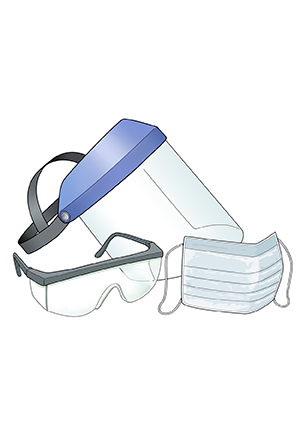
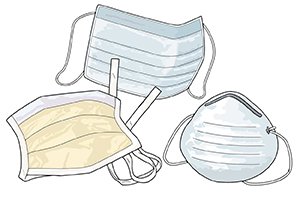
Mouth, nose, and eye protection if any body fluid may splash or spray. Wear a fluid-resistant mask with goggles or a face shield. Consider the outside of your goggles or mask contaminated as you remove them.
-
Respirators protect you from airborne particles or chemicals. Follow your facility’s guidelines for correct respiratory protection.
Disposing of PPE
Right after removing gloves and using other disposable items, put them into the correct trash bin. Reusable gowns and other linens should be placed in a specially marked laundry bin. Put reusable equipment in the correct place to be cleaned and disinfected. Remove all PPE except respirators before leaving the patient's room.
Online Medical Reviewer: Heather M Trevino BSN RNC
Online Medical Reviewer: Marianne Fraser MSN RN
Online Medical Reviewer: Shaziya Allarakha MD
Date Last Reviewed: 08/01/2024
© 2000-2026 The StayWell Company, LLC. All rights reserved. This information is not intended as a substitute for professional medical care. Always follow your healthcare professional's instructions.