People with cancer often tap into their spiritual side when battling the illness. This might include prayer, attending religious services, reading passages from a holy book, or simply expressing gratitude and love. Spiritual activities have not been proved to heal or reduce cancer. But many people find that religion can help them better deal with being sick.
Hospitals recognize that spirituality can play a crucial role in healing. They often have a chapel and offer visits from pastors, rabbis, clerics, and others to people who want them.
How spirituality may help
You may experience some of these benefits of spirituality when dealing with cancer:
Less depression
A significant number of people with cancer battle depression. But studies show that people with cancer who have high levels of spiritual well-being are less likely to be depressed. Finding inner peace can better help you to enjoy life, despite the fear, exhaustion, and pain that may occur during cancer treatment. Many people also report a stronger will to live.
A buffer against stress and anxiety
People with high levels of spirituality may be less worried about the prospect of their cancer recurring or progressing. Spirituality can also act as a buffer against the stress of cancer treatment, even when treatments become more aggressive and debilitating.
Reduced side effects
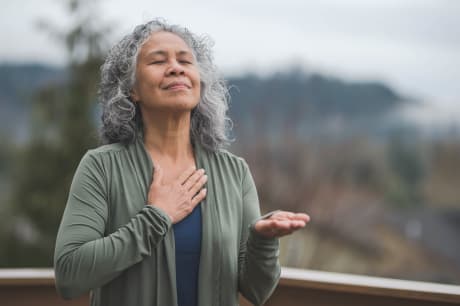
Meditation is a spiritual activity that involves mental focusing to relax the mind. It may help control or reduce some of the unpleasant physical side effects of cancer treatment. Massage, meditation, and yoga have all been shown to help ease lymphedema. This is the build-up of fluid in the body's tissues that often occurs during cancer treatment.
Comfort at the end of life
If someone with cancer is nearing death, they may find comfort through certain religious customs or rituals. The person's family may also be more at peace with a religious or spiritually oriented funeral or memorial service. People terminally ill with cancer should openly discuss their spiritual preferences with their loved ones and doctors well in advance. This can make sure that their wishes are honored.
Greater feelings of personal growth
People who engage in spiritual activities during their cancer treatment may be more likely to feel that the experience of being ill has changed them for the better. On the other hand, religious people who feel angry at or forsaken by their God may have a harder time dealing with the difficult emotions related to their illness.
Cautions about faith healing
Some people believe that their cancer can be cured through prayer or other religious activities rather than conventional treatments. But religious practices have not been scientifically shown to cure any physical illnesses. Some people who undergo faith healing sessions may feel better after the experience. But experts believe this may be because of the placebo effect. This is when symptoms improve because of a person's belief that the treatment will work. Symptom relief from the placebo effect is often short-term.
People with cancer who choose to refuse or delay traditional medical treatments in favor of faith healing may have serious health consequences. Taking part in faith-based activities, however, may help improve or maintain quality of life during the most difficult parts of your illness.
Friends and family members should be sensitive to their loved ones' feelings and beliefs about religion. People with cancer who don't believe in prayer, for example, may not want to know that an entire congregation is praying for them. Those who don't believe in any one religion may not want a visit from the hospital chaplain. If you have a loved one facing cancer, ask what their wishes are before you request spiritual assistance for them.
Featured in
Date Last Reviewed: 09/01/2025
© 2026 The StayWell Company, LLC. All rights reserved. This information is not intended as a substitute for professional medical care. Always follow your healthcare provider's instructions.
Compassionate Cancer Care
Learn about our cancer services and meet the specialists who support you at every step at the HPH Cancer Centers.
Meet Our TeamRelated Articles
Cancer Treatment and Low Platelet Count
One possible side effect from cancer treatment is a low platelet count. This means the number of platelets in your blood is lower than normal. Read on to learn more.
Life After Cancer: Treating Sleep Problems
Here are some ideas to help you sleep better.
Physical Exercise for Cancer
Exercise offers benefits for many people with cancer. Read on to learn how physical activity may help you, what safety steps to take, exercise tips for cancer survivors, and more.
Chemotherapy and Liver Toxicity
Although chemo is good at killing cancer cells, it can also harm healthy cells and organs. That includes your liver.