A skeleton in progress
-
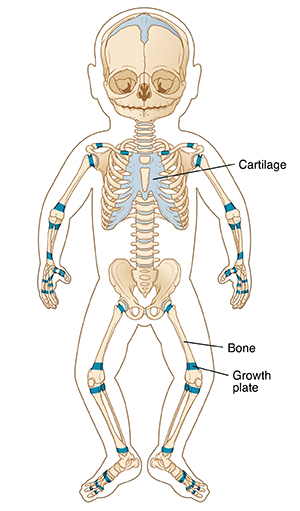
In babies, the bones in the head aren't fused together. This allows the head to be flexible so it can pass through the birth canal during childbirth. The bones in the skull don’t fully fuse until ages 1 to 2.
-
Children have more dense, elastic tissue (called cartilage) in their joints and other bony structures (such as the ribs). This allows the bones to continue to develop and grow as the child grows. This extra cartilage develops into bone over time. By about age
16 , most extra cartilage has matured into bone. -
Children have growth plates in each long bone. A growth plate is an area of soft bone at each end of the long bones. Growth plates allow the bone to grow as the child grows. The growth plates fuse by the time a child is
14 to 18 years old.
Featured in

Bone and Joint Care
Find expert care for joint pain, injuries, and conditions that affect how you move at the HPH Bone & Joint Centers.
Learn MoreRelated Articles
Teething
Learn how to care for your child when they are dealing with teething symptoms, and know when they need medical care.
Irritable Child, Uncertain Cause
Fussiness with irritable behavior is common among children. It is most likely a reaction to some change in the child's environment. Sometimes, though, fussy behavior is an early sign of a physical illness.
After Cleft Lip or Palate Surgery
Your child recently had surgery to help repair their cleft lip or cleft palate or both. As your child recovers, take these steps to help make sure that they heal correctly.
What Are Mallet, Hammer, and Claw Toes?
Mallet, hammer, and claw toes are among the most common foot problems. They are often caused by wearing shoes that are too short or heels that are too high.