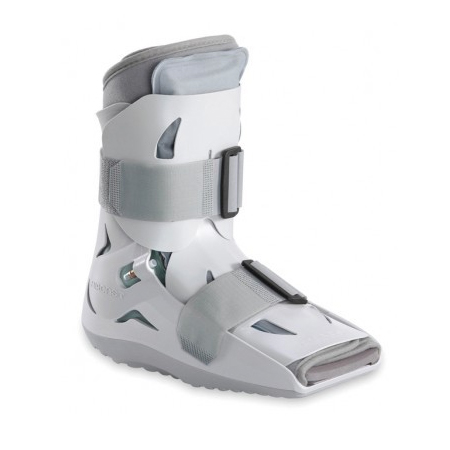
Traditional splints and casts for the foot and ankle protect the injury by preventing movement at the joints. But many injuries heal better and faster if the injured joint can be moved and also protected at the same time. This is the reason for using a walker boot.
This is a short boot. It supports and protects the foot and ankle while allowing you to walk. It has padded air cells that provide compression and help circulation. It is used for both foot and ankle injuries—both sprains and minor fractures.
Ankle and foot sprains can take 4 to 6 weeks or longer to heal. People with severe injuries or those older than age 60 may need more time to heal. During that time, you are prone to reinjury. You may suddenly twist your foot or ankle again while the ligaments are still weak.
When treating a sprain, wear the walker boot whenever walking for at least
Talk with your healthcare provider for specific advice about the treatment of your condition.
Online Medical Reviewer: Sabrina Felson MD
Online Medical Reviewer: Stacey Wojcik MBA BSN RN
Online Medical Reviewer: Thomas N Joseph MD
Date Last Reviewed: 09/01/2025
© 2000-2026 The StayWell Company, LLC. All rights reserved. This information is not intended as a substitute for professional medical care. Always follow your healthcare professional's instructions.
Bone and Joint Care
Find expert care for joint pain, injuries, and conditions that affect how you move at the HPH Bone & Joint Centers.
Learn MoreRelated Articles
Fitting Your Walker
Learn how to use your walker safely.
Plaster Splint Care
Here are directions to care for your splint at home.
Back Safety: Sitting
Sitting can strain your back if you don't do it right. Learn the right moves to protect your back.
Using Crutches: Up and Down Steps
When climbing up and down steps using crutches, remember this rule: Up with the good (unaffected leg) and down with the bad (affected leg). Read on for helpful tips and illustrations.