Good posture decreases back pain by reducing strain on your muscles. Remember to check your posture, using the self-help tips below, every time you move or adjust position.
Standing
-
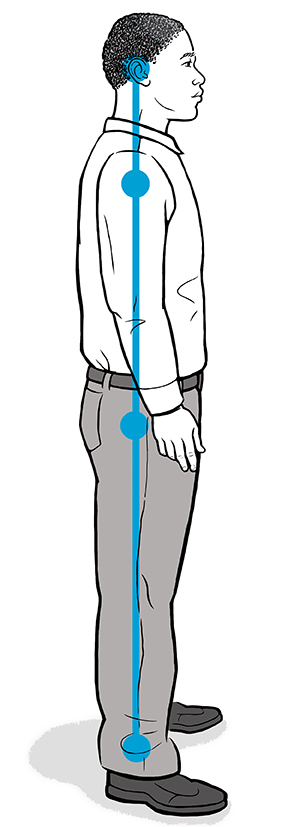
To help keep your spine straight, line up your ears, shoulders, and hips.
-
Stand with your feet shoulder-width apart. Or place one foot slightly in front of the other.
-
Keep your knees relaxed and stomach muscles slightly flattened.
-
Let your arms hang naturally down the sides of the body.
Bending over
-
Bend at your hips and knees.
-
Don’t bend at your waist or round your back.
-
Rest your weight on your arms if possible.
Working
-
When standing for a long time, shift your weight from your toes to your heels, or one foot to the other.
-
When reaching for objects over your head, use a stepladder. When you can’t, be sure to tighten your stomach muscles to keep your back from arching.
Online Medical Reviewer: Melinda Murray Ratini DO
Online Medical Reviewer: Stacey Wojcik MBA BSN RN
Online Medical Reviewer: Thomas N Joseph MD
Date Last Reviewed: 08/01/2022
© 2000-2026 The StayWell Company, LLC. All rights reserved. This information is not intended as a substitute for professional medical care. Always follow your healthcare professional's instructions.
Bone and Joint Care
Find expert care for joint pain, injuries, and conditions that affect how you move at the HPH Bone & Joint Centers.
Learn MoreRelated Articles
Fiberglass Splint Care
It will take up to 2 hours for your fiberglass splint to fully harden. Don't put any pressure on it during that time or it may break. Here are instructions to care for your splint at home.
Before Surgery: Preparing Your Home
You can make life easier and safer for after your surgery. Reduce household hazards now, before your surgery. By planning ahead, you'll have less to worry about during recovery.
Back Safety: Bending
Here are tips on how to move safely and protect your back when you need to bend.
Crutch Walking
A helpful, step-by-step guide to walking with crutches, including going up and down stairs.