Apply the skills you learned in the hospital or rehab center to your exercise program at home. Use a walker, cane, or crutches to help you move safely. By sticking with your exercise program, you'll walk more easily and return to an active life sooner. Contact your doctor or physical therapist if you have pain while exercising.
Maintaining your exercise program
Make exercise part of your daily routine. Lack of exercise can cause joint stiffness and decreased range of motion. But with continued exercise, you may even gain more strength and range of motion than you had before surgery. Keep meeting with your physical therapist as directed. They may add riding a stationary bike or other new exercises to your program.
Below is a list of exercises your physical therapist may suggest.
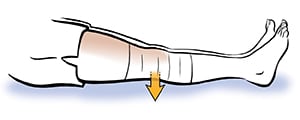
Quadriceps sets
Lying on your back, tighten your thigh muscles. Try to straighten your knee. Hold for
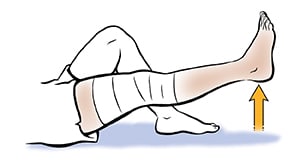
Straight leg raises
Tighten your thigh and straighten your knee as with the quadriceps set above. Lift your leg several inches (above your buttocks) off the bed and hold for
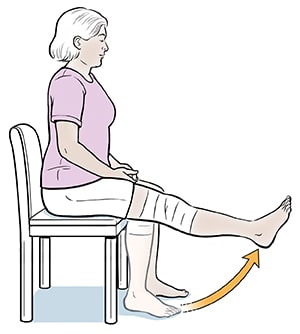
Sitting knee exercises
Start with
- Sit in a chair with both feet flat on the floor.
- Slowly straighten your operated or affected leg as much as you can. Hold for 5 seconds.
- Slowly bend your leg under the chair, bringing it back as far as you can. Hold for 10 to 20 seconds. Return your leg to the starting point.
Online Medical Reviewer: Daphne Pierce-Smith RN MSN
Online Medical Reviewer: Thomas N Joseph MD
Online Medical Reviewer: Trina Bellendir PT
Date Last Reviewed: 08/01/2023
© 2000-2026 The StayWell Company, LLC. All rights reserved. This information is not intended as a substitute for professional medical care. Always follow your healthcare professional's instructions.
Bone and Joint Care
Find expert care for joint pain, injuries, and conditions that affect how you move at the HPH Bone & Joint Centers.
Learn MoreRelated Articles
After Hip Replacement: Using Your Walker
Learn how to use your walker after hip replacement.
Osteoarthritis: Coping with Pain
There are many ways to control your pain. You’re making a good start by learning about osteoarthritis and its treatments. Knowing more about this condition helps you work with your healthcare provider to find answers to problems. Keeping a positive outlook can help you manage pain from day to day. And making time each day to relax and enjoy yourself may help you control osteoarthritis pain, instead of letting it control you.
Discharge Instructions: Internal Fixation of a Fractured Femur
Instructions to care for yourself after having internal fixation of a fractured femur.
Adjusting to Limb Loss
Losing a limb can be a profound shock. Everyone reacts to loss in different ways. You may be feeling angry, frustrated, scared, sad, or lonely. These are very common feelings after limb loss. You may go through distinct stages of grieving. Don’t hesitate to ask for the support that you need. You don’t have to go through this alone.