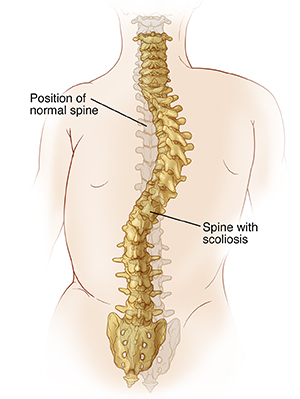
Scoliosis is a problem that makes the spine curve and twist from side to side. It's most often found in girls in their early teens. But boys can have it, too. No one is sure what causes scoliosis. But we do know that scoliosis is not caused by things like carrying heavy bags or playing sports. If someone in your family (like a parent or a sibling) has scoliosis, you may be more likely to have it, too.
What are the signs?
The signs of scoliosis may include:
-
One shoulder higher than the other.
-
One shoulder blade sticking out farther than the other.
-
An uneven waistline.
-
One hip higher than the other.
-
Hems hanging unevenly on you.
-
One side of the rib cage higher than the other when bending forward.
These signs often appear slowly as you grow. You and your parents may not even notice them. For this reason, schools in many states have screening programs to check for scoliosis. These programs help find scoliosis early and keep it from causing problems later.
A note to parents
Here are some suggestions:
-
Hearing that your child has scoliosis can be upsetting. But remember that mild cases may not need treatment. If your child's scoliosis is severe or getting worse, it can be treated.
-
Go to all your child’s appointments. Ask questions and be sure you understand the health care provider’s instructions.
-
Become informed about scoliosis. Try the library or do a search on the internet.
-
Form a team with your child and their provider. Be your child’s coach and biggest fan.
-
Know that each child is different. Your child’s provider will choose the treatment that is best for your child’s spine.

Bone and Joint Care
Find expert care for joint pain, injuries, and conditions that affect how you move at the HPH Bone & Joint Centers.
Learn MoreRelated Articles
Leg Cramps
A muscle cramp or spasm is a strong contraction of the muscle fibers.
Back Sprain or Strain
Learn how to care for your back sprain or strain at home.
Rib Fracture
You broke 1 or more ribs. This is called a rib fracture.
Wrist Splint
A splint is designed to prevent movement of the bones, muscles and tendons. Quick-release wrist splints are used because of their comfort and convenience for wrist and hand injuries.