A pain scale helps you rate pain intensity. In the scale, 0 means no pain, and 10 is the worst pain possible. Pain scales aren't used to compare your pain with another person's pain. A pain scale is used only to measure how your pain changes for you. You should rate your pain every few hours. You may feel some pain even with medicines. It's important to tell your health care provider if medicines don't reduce the pain. Be sure to mention if the pain suddenly increases or changes.

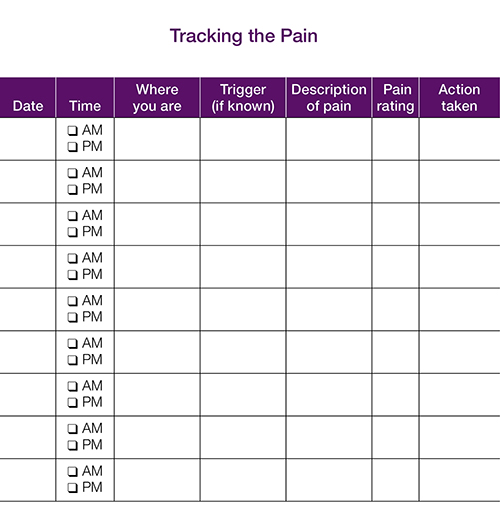
Keep track of your pain each day. You might copy the pain journal on this page or use a small notebook. Show the journal to your health care provider.
Online Medical Reviewer: Jimmy Moe MD
Online Medical Reviewer: Raymond Kent Turley BSN MSN RN
Online Medical Reviewer: Tennille Dozier RN BSN RDMS
Date Last Reviewed: 01/01/2025
© 2000-2026 The StayWell Company, LLC. All rights reserved. This information is not intended as a substitute for professional medical care. Always follow your healthcare professional's instructions.