Your knee is the largest joint in your body, with the kneecap, also known as the patella, serving as the protective bone for this crucial joint. The patella contributes to the strength and structure of the knee. It enables safe bending and straightening of your legs. The knee involves numerous working parts and bears a large load. It is exposed to various problems. If you face any difficulties or discomfort with your kneecap, see your healthcare provider for diagnosis and treatment. Identifying the right treatment is important. Some issues may improve with the assistance of physical therapy, while others may need surgery. Getting timely medical advice can help address knee concerns.
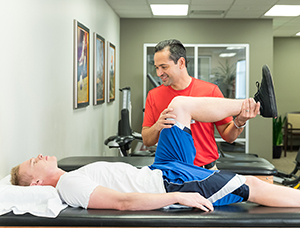
Whatever your goals, your healthcare provider may advise that you see a physical therapist (PT). They can help you reach your goals with a 3-stage rehab program. This program can get you back to your normal activities. It's done by helping your knee heal and by exercising your knee and its supporting muscles.
Stage 1
Starting to heal
You’ll work with your PT or healthcare provider to reduce pain and swelling. Then you can start to increase your knee’s range of motion.
Stage 2
Improving your knee's function
You’ll start flexibility and strengthening exercises. These help build up the muscles around your knee. To help improve exercises that may cause pain, you will be taught what specific exercises to do and which not to do to prevent more damage. Your PT may also teach you how to tape or support the affected knee and if shoe inserts may be helpful.
Stage 3
Practicing everyday moves
You’ll get your knee and leg ready for everyday activities. You’ll work to relearn movements and improve your knee's function. To help you get back to a favorite activity, your PT may retrain how your knee or hip moves. This is known as coordination training. It helps to ease knee pain and build muscle.
Online Medical Reviewer: Rita Sather RN
Online Medical Reviewer: Sravani Chintapalli
Online Medical Reviewer: Trina Bellendir PT
Date Last Reviewed: 10/01/2024
© 2000-2026 The StayWell Company, LLC. All rights reserved. This information is not intended as a substitute for professional medical care. Always follow your healthcare professional's instructions.
Bone and Joint Care
Find expert care for joint pain, injuries, and conditions that affect how you move at the HPH Bone & Joint Centers.
Learn MoreRelated Articles
Sitting with Crutches (Weight Bearing)
These images show how to sit safely with crutches.
Discharge Instructions: Caring for Your Removable Cast (Splint)
A removable cast, or splint, helps your body heal by holding your injured bones or joints in place. Here are instructions on how to care for it.
Wall Squats for ACL Healing
After you regain muscle control, it’s time to build strength. This helps you put full weight on your leg. For best results, warm up and stretch before starting. If your injury is recent, wait until swelling and pain decrease before doing this exercise.
Taking Care of Your Limb After Amputation
Soon after surgery, you’ll be taught how to take care of your residual limb. This is the part of your limb that remains after amputation. Follow all directions from your care team closely.